Recommended

tripadvisor logo

Need Help Booking? Call Us

Annapurna Circuit Trek - 15 Days

Annapurna Circuit Trek - 15 Days

Overview

Trip Fact

Trip Name:

Annapurna Circuit Trek

Best Month:

Sep - Dec & March - May

Max Elevation:

5,416 m

Walking hours Per Day:

5 - 8 Hrs

Trip Duration:

15 days

Trip Starts/Ends:

KTM/KTM

Trip Grade:

Moderate to Challenging

Meals:

BLD

Accommodation:

Hotel/Lodge/Teahouse

Group Size:

1+

Destination:

Annapurna Region of Nepal

Plan your Annapurna Circuit Trek with our inclusive package, featuring a detailed 15-day itinerary and cost breakdown for 2026. The package includes all essential services such as transport, accommodation, meals, permits, guides, and porters for a hassle-free and unforgettable experience. Explore diverse landscapes, natural beauty, and cross Thorong La Pass (5,416 m) while experiencing authentic Nepali Buddhist and Hindu cultur

Benefits of Booking the Annapurna Circuit Trek with HPA

  • Quick responses to all inquiries via email, WhatsApp, and Messenger with detailed information.
  • Clear explanation of the trekking package, including transparent cost breakdowns, ensuring trust and value for money.
  • Tailor-made itineraries based on client preferences, timeframe, group size, and fitness level, with comprehensive package services.
  • Strong focus on safety with well-trained and experienced guides, first aid kits, and support for emergency evacuation if needed.
  • Experienced and trained guides, along with strong and reliable porters for the adventure.
  • Flexible and easy booking, reservation, and payment system, with a simple refund process for advance deposits (according to company policy).
  • Airport pickup and farewell drop-off services at Kathmandu International Airport.
  • First aid medical kit and oximeter to monitor pulse rate and oxygen saturation at high altitudes to help reduce the risk of altitude sickness.
  • Efficient arrangement of all logistics to ensure a smooth and hassle-free trekking experience in Nepal.
  • Complimentary extra luggage storage service throughout the trek.
  • Provision of sleeping bag, down jacket, duffel bag, and walking poles (if you do not have your own, to be returned after the trek).
  • Company T-shirt and warm hat as souvenirs, along with a trekking certificate upon successful completion of the trip.

Overview of Annapurna Circuit Trek - 15 Days 

The Annapurna Circuit Trek promises an unforgettable adventure, offering an attractive blend of awesome landscapes, traditional villages, and unique cultural experiences. It is truly a trek of a lifetime, leaving trekkers in awe of the incredible diversity found within the Annapurna Region of Nepal.

One of most iconic trek in Annapurna region, Annapurna Circuit Trek is a circular trek where the concluding point is different from the starting point. On your way to trail, you will traverse through a completely contrasting landscapes having lush subtropical and alpine forest of mixed rhododendron and oak. Further, the quaint village nestled amidst of verdant and semi-barren land adds up the beauty of the trek.

Annapurna Circuit trek is one most well-known and busiest trek in Nepal. Annapurna Circuit route varies between 160km to 230km depending on where the transportation is used and trek ends. Annapurna section is 55km long with Kali Gandkai Gorge in the west, Marshyangdi River to the north and Pokhara valley to the south. The enchanting view of 16 peaks above 6,000m, 13 peaks above 7,000m and one peak above 8,000m fascinates the trek.

The 15-day Annapurna Circuit Trek is designed for those seeking a highland adventure and the opportunity to experience the natural beauty of the region during their vacation. This trek requires good physical fitness and strong determination, as the trail traverses the Marsyangdi Valley to the north of the Himalayas and crosses the Thorong La Pass (5,416 meters) before descending into the dramatic, semi-barren landscape of the Upper Kali Gandaki Valley.

Additionally, the trail passes through isolated hamlets of the Gurung, Manangi, and Thakali communities and includes many temples and monasteries. For extra adventure, you can join side trips and excursions to places such as Manang, Muktinath, and Jomsom. The Annapurna Circuit Trek is conducted in a fully teahouse mode and is considered a moderate to challenging trek, ideal for passionate walkers who are capable of walking 6 to 7 hours a day.

Annapurna Circuit Trek Highlights 

  • Annapurna Conservation Area Project (ACAP) – Worthy about  huge variety of landscapes, green and sub-tropical forest, valley, hills and wild life  
  • Magnificent view of Annapurna Mountain Range includes Annapurna I (8,091m) - 10th highest mountains in the world.
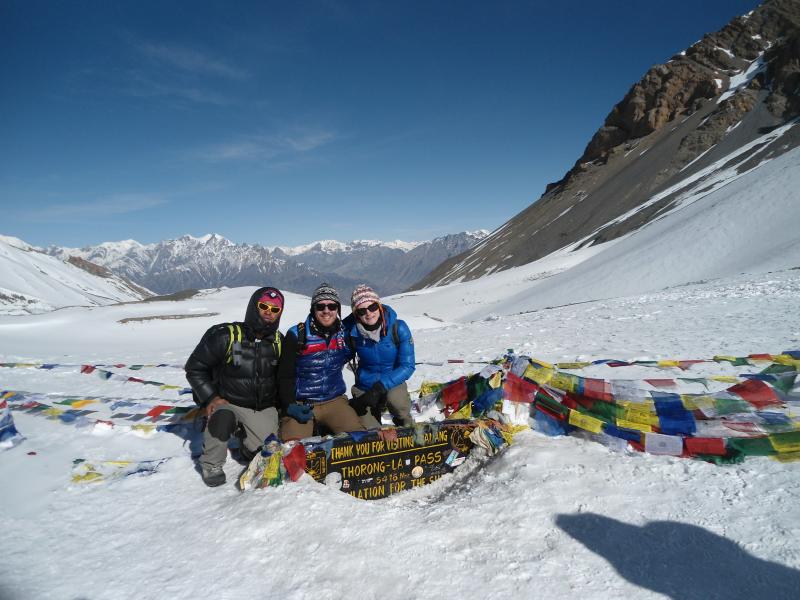
  • Thorong-la Pass (5,416m) - highest point of the Annapurna Circuit Trek
  • Tilicho Lake (4,918m) side trip required - highest lake in the world
  • Kali Gandaki Gorge – Deepest gorge in the world (between the Mt. Dhaulagiri (8,167m) and Mt. Annapurna (8,091m) 
  • Muktinath Temple – popular shrines of Hindus and Buddhist in one compound
  • Tatopani- Natural hot spring 
  •  Poon Hill – panoramic view point of Mt. Dhaulagiri, Mt. Annapurna and Mt. Manaslu ranges 
  • Beautiful ethnic group settlements – Gurung, Magar Thakali, Mananges, etc

Annapurna Circuit Trekking Route

This Annapurna Circuit Trek is a 15-days itinerary, including arrival and departure in Kathmandu. This trek starts from Syange after visiting the Kathmandu Valley and driving to Besisahar, which usually takes about 6-7 hours. Besisahar is the traditional starting point for the Annapurna Circuit Trek. However, in this itinerary, the trek begins from Syange, which is a 2-hour off-road drive from Besisahar.

From Syange, the trek begins with a walk through lush subtropical forests, terraced fields, and picturesque villages, passing through bamboo and rhododendron forests. The trail follows the Marsyangdi River, but for the most part, you will walk on the road to Dharapani. Dharapani, situated at an altitude of 1,960 meters, marks a change in landscape as you gain altitude.

The next day, the trail continues to Chame, passing through villages like Bagarchhap, Damaque, Timang, and Koto. The trail offers views of Lamjung Himal, Annapurna II, and Annapurna IV, as well as the Manaslu mountain range. Chame, the headquarters of the Manang district, is a popular place for shopping and has ATMs for withdrawing cash. It is also a significant stop with hot springs and stunning scenery.

Above Chame, the landscape changes dramatically until Manang. You will pass through dense forests and narrow river valleys, with magnificent views of the Annapurna range. The first stop is Pisang, where you will camp overnight. Pisang is divided into Upper Pisang and Lower Pisang, with the upper village offering better views.

There are two routes to Manang: the lower, easier route through Hongde and the upper, more challenging route via Ghyaru and Ngawal. Manang is a major stop for acclimatization, offering beautiful views and cultural experiences.

After acclimatizing in Manang, the trail heads to Thorong Phedi to cross the Thorong La Pass, passing through Ghunsang, Yak Kharka, and Ledar. The trek leads through alpine landscapes and pastures, with gradual altitude gain, continuing to ascend through alpine meadows and rocky terrain. Thorong Phedi is the base for the next day’s pass crossing.

Thorong Phedi to Muktinath (3,800m) via Thorong La Pass (5,416m) is the most challenging part of the trek and the highest point on the circuit. After reaching the top of the pass, the trail descends to Muktinath, offering spectacular views and a sense of achievement. At Muktinath, there is road access, so the next day you can catch a jeep or bus to Tatopani, enjoying a scenic drive along the Kaligandaki River in the lower narrow valley. Tatopani is famous for its natural hot springs, perfect for relaxing after days of trekking.

From Tatopani, the trail leads to Ghorepani, involving a steep climb through beautiful local villages and rhododendron forests. Ghorepani offers stunning panoramic views of the Annapurna and Dhaulagiri ranges. The next day, an early morning hike to Poon Hill provides breathtaking sunrise views over the Himalayas. Afterward, the trail descends through beautiful forests and villages to Nayapul, where you’ll drive to Pokhara for some well-deserved rest. Finally, you will drive back to Kathmandu to complete the Annapurna Circuit Trek.

Annapurna Circuit Trek – 15 Days and Cost

The cost of the Annapurna Circuit Trek is USD 950 per person for our standard 15-day itinerary. This price is based on a minimum of two participants.

The package includes services from your arrival in Kathmandu to your departure, including accommodation in Kathmandu and during the trek, public and private transportation as per the itinerary, meals during the trek, an experienced guide and porter, and all necessary permits as mentioned in the cost details. Please read the “Cost Includes and Excludes” section carefully for complete information.

The total cost may vary depending on group size, trek duration, type of transportation used, choice of luxury accommodation, or private trekking arrangements. However, our pricing for the Annapurna Circuit Trek is reasonable and fully transparent for all trekkers.

Additional expenses beyond the USD 950 package may include extra meals, luxury accommodation upgrades, private transportation, bar bills, bottled water, extra tea and coffee, an additional personal porter, tips for the guide and porter, travel insurance, and personal trekking gear.

Annapurna Circuit Trek Itinerary Options

There are many itinerary options for the Annapurna Circuit Trek, as road access is now available from Kathmandu to Manang (before Thorong La Pass) and from Muktinath back to Kathmandu (after the pass). This makes the trek highly flexible and suitable for different timeframes, ranging from short to longer itineraries.
In the past, the trek used to start from Besisahar, but nowadays most trekkers begin from Dharapani (1,900 m), which is also where our itinerary starts. Beginning from Dharapani allows for better acclimatization before ascending to crossing Thorong La Pass (5,416 m).

After crossing Thorong La Pass, some trekkers choose to take a vehicle from Muktinath, while others continue trekking to Tatopani or visit Ghorepani Poon Hill. For those with more time, an additional visit to Tilicho Lake is also possible.

Overall, there are several itinerary options for the Annapurna Circuit Trek, ranging from 8 to 15 days (Kathmandu to Kathmandu). Each option has its own features, cost variations, and required fitness levels.

Annapurna Circuit Group Join Trek

The Annapurna Circuit Group Join Trek is an excellent option for solo trekkers, offering many benefits such as Joining a group helps reduce costs for transportation, guides, porters, and accommodation through shared expenses. It also provides a great opportunity to share each other’s culture and history while making new friends, all while exploring the remote and stunning Annapurna region.

If you are traveling alone and looking to join a group trek for the Annapurna Circuit Trek in Nepal, consider High Pass Adventure. As a locally based trekking agency, we offer reasonable prices along with multiple fixed departure dates throughout the main trekking seasons—autumn (September to December) and spring (March to May). Private treks are also available daily during these periods. Our group join treks are specifically designed for solo trekkers, providing a cost-effective and enjoyable trekking experience.

Transportation Options – To the Starting Point and Back to Kathmandu

The Annapurna Circuit Trek starts from Dharapani, which is approximately 230 km by road from Kathmandu. The road condition is good highway up to Dumre, after which the route turns right and continues on a single-lane blacktop road up to Besisahar–Bhulbhule. The remaining section is narrow, gravel, and hilly.

There are two transportation options from Kathmandu to Dharapani: private transport or public transport.

Private Jeep/Hiace/Bus (Depending on Group Size):-

If you choose private transport from Kathmandu to Dharapani, your journey will be more comfortable, flexible, and faster. One major advantage is that you do not need to rush, as you can stop whenever you like—for lunch, restroom breaks, photos, or at major junctions.

The journey typically takes 7–8 hours by private vehicle, although this may vary depending on road conditions, traffic, or landslides. You can start your trip around 8:00 AM from Kathmandu and reach Dharapani by 5:00–6:00 PM. This option allows for a smooth and direct journey without changing vehicles. The same arrangement can be applied for the return journey (Muktinath to Tatopani, Birethanti to Pokhara, and Pokhara to Kathmandu).

Local (Public) Bus:-

If you choose to travel by local bus as part of our Annapurna Circuit Trek package, you should be ready at your hotel by 6:00 AM, as the bus departs between 6:30 and 7:00 AM from the bus park. Our guide will pick you up from your hotel and take you to the bus station, where your journey will begin. You will travel to Besisahar by bus and then switch to a shared jeep to reach Dharapani.

Local (public) buses do not provide the same level of comfort as private vehicles. The journey usually takes 6–7 hours to Besisahar and an additional 3 hours to Dharapani. You will also have limited flexibility to stop for photos or breaks, as public transport follows fixed stops. However, the journey can still be a unique and memorable experience.

The same travel arrangement applies for the return journey (Muktinath to Tatopani, Birethanti to Pokhara, and Pokhara to Kathmandu).

We highly recommend private transport for the Annapurna Circuit Trek, as it offers greater comfort and flexibility. Our guide will accompany you whether you choose private or public transport.

Why Book the Annapurna Circuit Trek with High Pass Adventure?

Booking the Annapurna Circuit Trek with High Pass Adventure offers several benefits. We provide quick and reliable information via email, WhatsApp, Viber, and Facebook Messenger, making it easy for you to prepare for your trip. Our goal is to ensure a memorable and rewarding experience with a strong focus on safety, quality service, affordable and transparent pricing, and customized itineraries to meet your needs.

Our team consists of experienced guides and staff who are highly familiar with the region, its culture, and trekking routes. Safety is our top priority, and we are fully prepared to arrange emergency evacuation if required. This local expertise ensures a more authentic, safe, and enjoyable trekking experience.

We provide high-quality services, including comfortable accommodation, nutritious meals, and reliable transportation. We also maintain flexible group sizes—ranging from solo trekkers to large groups—while keeping groups manageable to ensure a more personalized experience and better interaction with your guide.
With all these services, we proudly maintain a 99% success rate, demonstrating our commitment to excellent service and ensuring that our clients complete their trek successfully.

Don’t miss the opportunity to book your Annapurna Circuit Trek with High Pass Adventure for an unforgettable Himalayan experience.

Side Trip around the Manang Village 

Manang Village is an ideal place for an acclimatization day, offering many options for side trips. These excursions include the 100 Lama Monastery, Ice Lake, Gangapurna Lake, Milarepa Cave, and Chongkar Viewpoint, providing trekkers with opportunities to further explore the breathtaking landscapes and rich traditions of the Himalayas. During the acclimatization day at Manang, trekkers can choose to visit one of these spots, but it is essential to consult with your guide to select the most suitable option.

  • The 100 Lama Monastery (Praken Gompa)

The 100 Lama Monastery (Praken Gompa) is located above Manang Village at an altitude of approximately 3,900 meters. The round trip takes about 2-3 hours and involves an easy ascent. This Buddhist monastery offers trekkers an opportunity to receive blessings for a safe journey over the Thorong La Pass. It is also a chance to engage with the local Buddhist culture and enjoy the serene surroundings. The monastery provides stunning views of the Annapurna range, including Gangapurna and Tilicho Peak.

  • Ice Lake (Kicho Tal)

Ice Lake (Kicho Tal) is located at a high altitude of 4,600 meters above Manang Village and direction accessed via a steep trail. The round trip from Manang takes approximately 6-7 hours, making it a challenging yet rewarding acclimatization hike. The hike is strenuous due to steep ascents and the high altitude, but the effort is well worth it. Ice Lake is a high-altitude glacial lake with crystal-clear turquoise water, surrounded by snow-capped peaks. The lake and its trail offer spectacular views of Annapurna II, Annapurna III, and Gangapurna.

  • Gangapurna Lake

Gangapurna Lake is located at the base of the Gangapurna Glacier, just a short walk from Manang. The round trip takes 1-2 hours, making it suitable for all types of trekkers. The walk is easy and highly rewarding, offering stunning views of the Marsyangdi Valley. The lake features milky turquoise glacial waters that reflect the Gangapurna Glacier. This spot is ideal for relaxing and soaking in the breathtaking beauty of the Himalayan landscape.

  • Milarepa Cave

Milarepa Cave is located near Braga Village, a few kilometers before Manang, at an altitude of approximately 4,200 meters. This sacred cave is famous as the meditation site of Milarepa, a revered Tibetan Buddhist saint. The round trip from Manang Village takes 4-5 hours and requires moderate fitness levels. The hike offers a spiritual experience combined with breathtaking views of the Annapurna and Pisang peaks. The route is peaceful and reflective, providing a serene escape from the main trekking trail.

  • Chongkar Viewpoint

Chongkar Viewpoint is located near Manang, above Gangapurna Lake, at an elevation of approximately 4,000 meters. The round trip from Manang takes 2-3 hours and requires moderate fitness. This viewpoint offers panoramic 360-degree views of Annapurna II, Annapurna III, Gangapurna, Tilicho Peak, and the Marsyangdi Valley. It is an excellent spot for sunrise or sunset photography and provides a peaceful escape with fewer trekkers, making it a rewarding experience

Thorong La Pass (5,416 meters)

Thorong La Pass (5,416 meters) is a famous high-altitude mountain pass and the highest point of the Annapurna Circuit Trek in Nepal. It is one of the highlights of the trek, connecting the Manang District to the Mustang District and crossing from the Annapurna region into the Kali Gandaki Valley. This pass links Manang and Mustang.

Due to the high elevation, it presents a challenging altitude. Trekkers typically start the walk from either Thorong Phedi (4,450 meters) or High Camp (4,800 meters), where there are tea houses with basic accommodations. It's crucial for trekkers to take precautions against altitude sickness, and proper acclimatization is critical for crossing the pass safely.

The climb to Thorong La is steep and physically demanding, especially in snowy conditions. However, from the pass, trekkers are rewarded with panoramic views of the Annapurna and Dhaulagiri ranges, along with other peaks, including Gangapurna, Khatung Kang, Nilgiri, and Tilicho Peak.

We highly recommend that all trekkers hire an experienced guide and choose the best time to ensure the successful completion of the Annapurna Circuit Trek.

Walk Safely during the Annapurna Circuit Trek

Safety is crucial while trekking in the Himalayan region and the same applies to the Annapurna Circuit Trek. Always walk cautiously and carefully along the trail. The trails in the Himalayas can be slippery and rocky, especially during rain or snow time. This is particularly true at the end of May, the beginning of September, and during the winter months of December, January, and February. In higher elevations on the Thorong La Pass, snow and ice can make the trails even more challenging. Melting snow can cause paths to become slippery and muddy, so take extra care when walking near cliffs and pass.

During the main trekking season, the trails will be more crowded with trekkers, guides, porters, yaks, domestic animals and donkeys. At times, you may need to stand on the safe side of the trail and wait when crossing bridges or navigating narrow spaces. Additionally, be cautious of wild animals, domestic animals and yaks, as they may graze above the trail, which can sometimes cause stones to fall. Always stay alert in such areas—avoid stopping and keep moving if you're below them.

It’s also important to stay away from riversides, streams, avalanche-prone areas, rock fall zones, glacier regions, and areas near waterfalls, as these can pose additional hazards. By following these safety tips, you’ll ensure a safer trek. Your guide will also brief you on these precautions every day during the Annapurna Circuit Trek.

Preparation for the Annapurna Circuit Trek

Proper preparation is essential for the Annapurna Circuit Trek to ensure safety, reduce stress, and help you fully enjoy the journey. This trek is far from your home country, located in the Himalayan region, and involves 15 days of trekking in Nepal plus two days of travel to and from the country.

Preparation includes booking your trip with a reputable trekking agency, hiring experienced guides and support staff, and training for high-altitude trekking to reduce the risk of altitude sickness. It also involves managing your budget, packing the right gear, and building endurance and strength through activities such as walking, day hiking, and running, biking, jogging, stretching, and swimming.

Another important part of preparation is seeking medical advice before traveling, especially if you have respiratory issues or other health concerns such as food or drink allergies. Travel insurance is also essential. We recommend insurance that covers emergency evacuation during the 16-day Annapurna Circuit Trek, as the route is remote and emergency medical care may be difficult to access.

By following these guidelines and trekking with an experienced guide, you can successfully complete the 15-day Annapurna Circuit Trek and enjoy a memorable and worry-free vacation.

Important Note for the trip:

  • During your pre-trip meeting in Kathmandu, we provide you with a free T-shirt and a warm cap (beanie), as well as a refundable duffel bag for packing your trekking gear.
  • We assign one porter for every two trekkers, so the duffel bag should weigh around 10 to 12 kg, which is carried by the porter throughout the trek. Additionally, we can arrange other working team members according to your requirements.
  • You must have your own special daypack with a waterproof cover for carrying your daily necessities things like cash, necessary papers, a water bottle or bladder, sunglass, mobile phone, power bank, a camera, toiletries, sunscreen, lip guard, a notebook, light clothing, etc. 
  • The guide will check your trekking gear and give you suggestions on what to pack and what not to pack. Any unnecessary items (non-trekking items) can be stored at the hotel or our office in Kathmandu.
  • A down jacket and a sleeping bag are required for trekking in the Nepal Himalayas. The sleeping bag should be rated for temperatures between -10 to 20 degrees Celsius, depending on the trekking route. If you don't have either of these items, you can rent them in Kathmandu for USD 2 per day. Please note that in case of loss or damage, you will be required to pay the cost of USD 100 per item.
  • Every day, the guide will brief you about the walk, nature, food, accommodation, culture, and other aspects of the trek. It's important to listen to and follow the local rules and guidelines provided by the guide.
  • Respect locals' privacy before photographing them or their children and appreciate the local culture and customs. Always walk together with your guide and stand in a safe place while animals are passing. Do not smoke or drink alcohol at elevations above 3000 meters.

Important Note for Itinerary:

The itinerary provided below is only a guideline for the Annapurna Circuit Trek. If you have your own itinerary, we are flexible and happy to follow it. If you do not, we can create a new itinerary based on your requirements, vacation timeframe, fitness level, and group size. This trek can be customized according to your preferred duration, budget, and schedule.

The trek starts from Dharapani, so you will need to travel there from Kathmandu by vehicle. Please note that travel time may be longer than indicated due to road conditions in Nepal. Roads can be blocked by traffic or landslides on the routes and from Muktinath to Pokhara and from Pokhara to Kathmandu are the same conditions. We ask that you understand and be prepared for these possible delays.


Annapurna Circuit Trek - 15 Days Altitude Profile

Itinerary Expand All Close All

High Pass Adventure warmly welcomes you to Nepal at Tribhuvan International Airport (TIA). A member of our team will be waiting for you outside the baggage hall, holding an A4-sized paper with your name and our company name.

This representative will escort you from the airport to your hotel in Kathmandu via a private vehicle. Upon arrival at the hotel, you can check in, rest, and freshen up before attending a meeting at our trekking office to discuss the details of your Classic Annapurna Circuit Trek program.

Food
Welcome Dinner
Accomodation
Hotel
Elevation
1350

This day is an extra day in Kathmandu for trekking preparation and rest after your long international flight to Nepal. Our guide will review your trekking equipment to finalize your clothing and gear, help you decide what to take on the trek and what to leave at the hotel, and identify any missing items that may need to be purchased. Trekking permits will also be arranged on this day.

Food
Breakfast
Accomodation
Hotel
Elevation
1350

Our guide will come to your hotel, and you will need to leave with the guide early in the morning, after breakfast at the Kathmandu hotel. The guide will take you by taxi to the bus station to catch a public bus to Besisahar. The bus ride follows the Prithvi Highway, passing through river valleys, small towns, terraced fields, and green hills until Dumre, where you will turn right to Besisahar along the Marsyangdi River, through beautiful terraced rice fields.

From Besisahar, we will need to change to another jeep to reach Dharapani. You will enjoy the views of Nepali villages, rivers, forests, and terraced rice fields.

Food
Breakfast / Lunch /Dinner
Accomodation
Tea-house
Elevation
1900

After breakfast in Dharapani, the trekking trail heads toward Chame. The journey begins with a gentle ascent to Danaque, followed by a trail passing through Bagarchhap. It then continues upward to Timang Village, winding through beautiful pine and rhododendron forests. Timang offers the best viewpoint of Mt. Manaslu. After crossing Timang, you will pass through Thanchok and Koto before reaching Chame, passing some streams and pine forests along the way.

Chame is the headquarters of the Manang District and has many shopping centers, banks, and roads connected from Besisahar. On this day, you will enjoy views of mountains, rivers, and forests before reaching Chame.

Food
Breakfast / Lunch /Dinner
Accomodation
Tea-house
Elevation
2710

After breakfast at Chame, the trekking trail heads to Pisang, passing through Brathang and Dukur Pokhari and through green pine forests. After Dukur Pokhari, the trail continues to Upper Pisang, where you will cross the Marsyangdi River via a suspension bridge.

This day offers a chance to see Lamjung Himal, along with the sun's rays shining over Annapurna II, Pisang Peak, and other snow-capped peaks and hills. It will be a wonderful day, filled with beautiful Himalayan views and stunning landscape scenery.

Food
Breakfast / Lunch /Dinner
Accomodation
Tea-house
Elevation
3300

Today, there are two options to reach Manang: the lower trail and the upper trail. The lower trail has a road constructed, so we highly recommend taking the upper trail, and your guide will lead you along it. The upper trail offers a more fascinating experience with panoramic mountain views and Tibetan cultural influences.

You will ascend to Ghyaru Village from Pisang, and the trail continues towards Manang through Ngawal. On this day, you will enjoy the full beauty of the Annapurna mountain range and other snow-capped peaks along the trail.

Food
Breakfast / Lunch /Dinner
Accomodation
Tea-house
Elevation
3540

Today will be a rest day to acclimatize in Manang because you are above 3,500 meters. It is necessary for all trekkers to acclimate before continuing the climb to cross Thorong La Pass (5,416 meters). However, on this day, you will hike for a couple of hours to ascend and help adjust to the altitude.

There are many places for a side trip, such as Ice Lake, Gangapurna Lake, and a few caves. You can discuss with your guide which areas you would like to visit. After finalizing the hiking route, you can make a short hike around the village or hike up to Ice Lake to increase your altitude in preparation for crossing Thorong La Pass.

From Manang, you will enjoy splendid views of Annapurna IV, Gangapurna, Tilicho Peak, and other mountains.

Food
BLD
Accomodation
Tea- House
Elevation
3540

After breakfast at Manang, the trekking trail heads to Yak Kharka. The trail ascends to Ghunsang through Tengi Village, leaving the Marsyangdi Valley and turning right into the Jharsang Khola Valley to reach Yak Kharka. You will pass through high-altitude barren land and alpine juniper bushes.

Today will be a relatively short trekking day, but you may feel some difficulty due to the high altitude. You will enjoy amazing mountain views and may have the chance to see wildlife such as blue sheep, marmots, and more.

Food
BLD
Accomodation
Tea-house
Elevation
4050

From Yak Kharka, the trekking trail heads to Thorong Phedi (4,550 meters), which is the base for crossing Thorong La Pass (5,416 meters). It is necessary to spend the night here before crossing the pass. Some trekkers may choose to head to Thorong High Camp (4,800 meters), but we highly recommend that all trekkers stay at Phedi for a good rest.

The trail is gradual, and the walking is easy but slow, with opportunities to rest along the way. You will cross a couple of suspension bridges and enjoy great views of the mountains before reaching Thorong Phedi. If you like, you can hike up to Thorong High Camp for additional high-altitude acclimatization.

Food
Breakfast / Lunch /Dinner
Accomodation
Tea-house
Elevation
4450

Today will be a long trekking day, as you start from 4,500 meters at Thorong Phedi, cross Thorong La Pass at 5,416 meters, and reach Muktinath at 3,800 meters. It will be an exciting and wonderful day, but also a challenging one due to walking on high-altitude terrain.

You will need to wake up early and have breakfast, as it is important to start early to cross the pass before the weather worsens. The trail ascends gradually until the top of Thorong La (5,416 meters), which takes about 3 to 5 hours. From the top, you will enjoy panoramic mountain views, have time to capture the moment in your camera, and explore the area. Then, you will begin the long descent, making your way into the Mustang district.

After a steep descent, you will reach the first teahouse in Chabarbu, where you can stop for lunch. Afterward, the trail continues down to Muktinath. Muktinath is a famous pilgrimage site for Hindu and Buddhist devotees, as well as a great place to rest after the long walk.

Food
Breakfast / Lunch /Dinner
Accomodation
Tea-house
Elevation
3800

There is a road connects directly to Pokhara, but you will stop at Tatopani as part of this classic Annapurna Circuit Trek itinerary. After breakfast in Muktinath, you will catch a vehicle to Tatopani, with plenty of public transportation options available. The drive takes you through Jomsom, Marpha, Tukuche, Kobang, Kalopani, Rupse Chhahara, and Dana. The road is somewhat scary, dusty, and bumpy in places. Upon arriving in Tatopani, you can enjoy a rejuvenating hot bath in a natural hot spring, providing much-needed relaxation after the long trek and drive.

Food
Breakfast / Lunch /Dinner
Accomodation
Hotel / Lodge / Tea House
Elevation
1200

Today involves a long ascent to reach Ghorepani. The trek begins after breakfast at the hotel in Tatopani. Initially, the trail descends briefly to a suspension bridge over the Kali Gandaki River. After crossing this bridge, you’ll encounter another bridge over the Ghar Khola before the trail starts ascending toward Sikha Village. Along the way, you’ll pass through charming Magar and Gurung villages. Sikha offers a few teahouses where some trekkers choose to stay overnight, while others stop here for lunch. After lunch, the trail continues upward to Ghorepani, passing through rhododendron forests and the villages of Phalate and Chitre.

Food
Breakfast / Lunch /Dinner
Accomodation
Tea-house
Elevation
2870

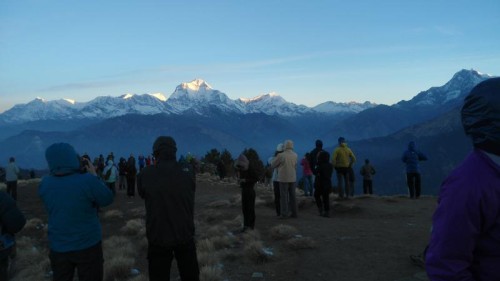
Poon Hill (3,210 m) is one of the best sunrise and sunset viewpoints for the Annapurna and Dhaulagiri mountain ranges. Typically, all trekkers head to Poon Hill early in the morning, before breakfast, to witness the breathtaking sunrise over these majestic peaks. The 2-kilometer-long hiking trail takes approximately 1.5 hours and can be challenging due to the early start and high elevation.

After an unforgettable experience at Poon Hill, you will return to your hotel in Ghorepani for breakfast. Following breakfast, the journey continues toward Nayapul, where you will catch a vehicle to Pokhara. The trail passes through beautiful forests of rhododendron, oak, bamboo, and pine, while crossing scenic spots like Nangethanti, Banthanti, Ulleri, Hile, and Birethanti. Along the way, you may even spot some wildlife, such as deer and langurs (white monkeys).

Once you arrive in Pokhara, you’ll have the opportunity to explore the city and visit Fewa Lake if time permits. In the evening, you can celebrate the successful completion of your trek with your guide and porter by enjoying a delightful Western-style dinner.

Food
Breakfast / Lunch /Dinner
Accomodation
Hotel
Elevation
850

After breakfast at the Pokhara hotel, we need to leave early in the morning around 6:30 AM, as the tourist bus departs at 7:00 AM. The road is a highway, paved in some areas and unpaved in others. The journey will take you along river valleys, through a few towns, terraced fields, and green hilly scenery on the way to Kathmandu.

Upon arrival in Kathmandu, you can rest at the hotel after the long drive. In the late evening, you will be invited to a farewell dinner at a Nepali cultural restaurant, where you can enjoy traditional music and dance performances.

Food
Breakfast / Lunch /Dinner
Accomodation
Hotel
Elevation
1350

Today marks the last day of your trip to Nepal. One of our High Pass Adventure staff members will accompany you to Kathmandu International Airport for your flight departure.

If you wish to plan an additional trip to Nepal or return for another adventure, we are always here to assist you with your next journey and adventure activities.

Food
Breakfast / Lunch /Dinner
Accomodation
Hotel
Elevation
1350

What Is Included ?

Our well-experienced and genuinely knowledgeable trekking guides and the best porters at High Pass Adventure have been working together to provide excellent service, ensuring a quality tour that creates a lifetime of memorable experiences. We pay our trekking and tour guides and porters salaries that are higher than the government-fixed amounts. All our costs are transparent; clearly detailing what is included and excluded. You can follow the listing below for more details about the costs:

Cost Included Section 

  • Airport pick-up and drop-off service, by private vehicles.
  • Three nights' hotel accommodation in Kathmandu (two stars) with BB (EP) plan
  • One night hotel accommodations in Pokhara (tourist class) with BB (EP) plan
  • Kathmandu valley sightseeing (Bhaktapur Durbar Squire, Pasupatinath and Bouddhanath) with tour guide and private vehicle
  • Transportation includes a public bus from Kathmandu to Besisahar-Syange and from Muktinath-Tatopani. Additionally, a private vehicle is provided for the journey from Nayapul to Pokhara, and a tourist bus is arranged for travel from Pokhara to Kathmandu.
  • Three meals per day during the trek (breakfast, lunch, and dinner), along with one cup of tea or coffee per meal. You can choose from the menu, but only one item per meal.
  • Seasonal fresh fruits will be provided every night after dinner 
  • Accommodation will be in tea houses during the trek, with basic twin-sharing rooms
  • An experience English Speaking trained, Government license Holder Guide
  • Porter, we assign one porter for every two trekkers, a porter typically carries 20 to 25 kg
  • An extra assistant guide is provided for groups with more than 6 participants
  • All trekking permits, including Annapurna Conservation Area project (ACAP) and TIMS (Trekkers' Information Management System) 
  • All applicable taxes as per government rules and regulations
  • First Aid medical kit, Oxy-meter to check pulse, heart rate and oxygen saturation at higher altitude (Very useful to check Altitude Mountain Sickness (AMS) symptoms)
  • Guide and porter salary, food, accommodation and insurance during the trek
  • Use of down Jacket, sleeping bag and walking Poles (if you don’t have your own, to be return after the trip is completed). Using these 3 items you pay $10 USD each as maintenance and washing charge
  • If you need a duffel bag to pack your trekking gear, we provide one free of cost. However, it must be returned after the trip is completed.
  • Tour Certificate after complete the trip
  • Annapurna Region Trekking route map (one map for one group) included Annapurna Circuit Trek
  • A complimentary High Pass Adventure T-shirt and warm hat are included!
  • Farewell dinner with traditional Nepali music and cultural dance will be held at a local restaurant

What Is Excluded?

  • Nepal entry visa fee $50 USD for 30 days visa on arrival.
  • Lunch and dinner in Kathmandu and Pokhara 
  • Extra night hotel accommodation in Kathmandu and Pokhara other than itinerary as well as extra trekking days
  • Travel insurance and Mountain rescue service (covers emergency Rescue and Evacuation)
  • Personal nature expenses (phone, laundry, water, bar drinks, battery recharge, donations, shopping, extra porters, hot shower etc.)
  • Entrance fees for Kathmandu Valley sightseeing that cost $30, as well as monasteries and monuments during the trek
  • If you are single, Porter cost is extra ($260)
  • If you prefer to fly from Kathmandu to Pokhara, the flight cost is $105 per person
  • Tips to Trekking staff (Tips is expected)
  • Any other expenses that aren’t mentioned in the section above
     

Route Map

route map
SN Start Date Duration Spaces Remarks Join Group
1 2026-03-28 15 Days 7 (10) Available Book Now
SN Start Date Duration Spaces Remarks Join Group
1 2026-04-03 15 Days 5 (10) Available Book Now
2 2026-04-07 15 Days 6 (10) Available Book Now
3 2026-04-11 15 Days 9 (10) Available Book Now
4 2026-04-17 15 Days 7 (10) Available Book Now
5 2026-04-22 15 Days 8 (10) Available Book Now
6 2026-04-27 15 Days 6 (10) Available Book Now
SN Start Date Duration Spaces Remarks Join Group
1 2026-05-02 15 Days 9 (10) Available Book Now
2 2026-05-04 15 Days 7 (10) Available Book Now
3 2026-05-08 15 Days 7 (10) Available Book Now
4 2026-05-12 15 Days 4 (10) Available Book Now
5 2026-05-17 15 Days 7 (10) Available Book Now
6 2026-05-21 15 Days 8 (10) Available Book Now
7 2026-05-28 15 Days 9 (10) Available Book Now
8 2026-05-31 15 Days 9 (10) Available Book Now
SN Start Date Duration Spaces Remarks Join Group
1 2026-09-10 15 Days 8 (10) Available Book Now
2 2026-09-17 15 Days 7 (10) Available Book Now
3 2026-09-22 15 Days 8 (10) Available Book Now
4 2026-09-26 15 Days 7 (10) Available Book Now
SN Start Date Duration Spaces Remarks Join Group
1 2026-10-03 15 Days 5 (10) Available Book Now
2 2026-10-05 15 Days 6 (10) Available Book Now
3 2026-10-12 15 Days 5 (10) Available Book Now
4 2026-10-17 15 Days 8 (10) Available Book Now
5 2026-10-22 15 Days 8 (10) Available Book Now
6 2026-10-28 15 Days 6 (10) Available Book Now
SN Start Date Duration Spaces Remarks Join Group
1 2026-11-02 15 Days 0 (15) Unavailable Book Now
2 2026-11-05 15 Days 9 (10) Available Book Now
3 2026-11-11 15 Days 7 (10) Available Book Now
4 2026-11-17 15 Days 7 (10) Available Book Now
5 2026-11-23 15 Days 9 (10) Available Book Now
6 2026-11-28 15 Days 6 (10) Available Book Now
SN Start Date Duration Spaces Remarks Join Group
1 2026-12-03 15 Days 7 (10) Available Book Now
2 2026-12-07 15 Days 8 (10) Available Book Now
3 2026-12-13 15 Days 9 (10) Available Book Now
4 2026-12-17 15 Days 7 (10) Available Book Now
5 2026-12-24 15 Days 8 (10) Available Book Now
6 2026-12-29 15 Days 6 (10) Available Book Now

FAQs

It means a lot to choose High Pass Adventure because of our many years of experience operating the trekking in Nepal with best service to clients. Our guides also provide the best service and they bring friendship, fun, convenience, adventure, and most importantly safety. We have clear transparency for the cost with service.We have a 99% success rate from all trips in Nepal, and many repeat clients. 

Booking and payment process for the trek is a very easy system with us. After choosing the trip, please click the booking form for the final trip booking and reserve the trip date.  The payment process requires you to deposit 15% of the full trip cost in advance by bank transfer or western union  and the remaining cost you can pay after arriving in Kathmandu. 

If you want to cancel the trip and refund the advanced fund, these policies are very clear and simple. First, you have to send us an email about trip cancellation and then we process the cancellation of your hotel, transport and guide. About the refunds, 15% of the advance deposit that was your booking confirms the trip, it will be considered a cancellation fee. This fund will be difficult to resend back. That's why, you can postpone the trip to a later date or recommend to others friends or family to use this fund. 

Yes, you can pay by either credit card, bank transfer,  or cash.  We recommend you to pay in cash for the remaining trip balance because the payment by credit card charges you 4 % extra service charge by bank. 

Yes, you can easily get an arrival visa at the airport but you have to fill up the online visa form before arriving at the entry point with all your information. You have to have a valid passport for six months and need 3 / 4 PP size pictures and they accept  the following currency such as Euro, Swiss Franc, Pound Sterling, US Dollar, Australian Dollar, Canadian Dollar, Hong Kong Dollar, Singapore Dollar and Japanese Yen to pay the visa charge. The visa charge is $30 for 15 days, $50 for 30 days and $125 for 90 days.  For all information click this our website. 

After issuing the Nepal visa, you will exit the airport terminal building. There will be our staff holding your name and our company name (High Pass Adventure) on the display board. You can easily find him and he will welcome you. Then, he will be guiding you to bring the hotel by private vehicle and help you check in. 
If incase you don’t find him or get any difficult, you can make a call in these numbers, +9779-841142217 (Purna), +977-9841044533 (Sundar) or +977- 9851132128 (Ganesh). We can immediately help you as soon as possible. 
Please be aware of unknown people because they may offer to help you with your luggage or transportation and charge high costs. So, be careful with them and wait for our staff to pick you up. 

There are many types of hotels around Thamel in Kathmandu. We will arrange the best accommodation as per your requirements.  Or, we can suggest you with a selection of luxurious hotel options to choose from you and assist to reserve the accommodation. 

There are two best seasons for trekking to Annapurna Circuit. These are the autumn season (September to December) and spring season (March to May). So, the best time to go on the Annapurna Circuit Trek is during the spring and autumn. These both seasons offer unbelievable chances to experience the natural beauty, cultural richness and enjoyable weather. 

Yes, you can choose your own departure date on your suitable holiday for Annapurna Circuit Trek. We have also fixed the departure date to Annapurna Circuit Trek but that might not match on your holiday program.  So that  we can help to create the best private itinerary on your own time frame.

The difficulty level of the Annapurna Circuit Trek is moderate and challenging because you have to walk uphill to Thorong-La (5416m) and after that continue downhill to Muktinath (3800m). The trekking trails are rocky in the forest which makes it tough to walk in a few places.  Our guide manages the tea-house for accommodation, resting place of rest, acclimatization day to manage, high altitude, slow walk, and short easy steps to complete the trip without any stress. 

Annapurna Circuit Trek does not require technical climbing skills, so you don’t need special training for trekking.  But, we highly recommend having good physical fitness and preparation to easily complete the Annapurna Circuit Trek. Normal walking, day hiking, running, biking, jogging, swimming practices are beneficial in preparing for the Annapurna Circuit Trek. 
 

Annapurna Circuit trek is very safe during the spring and autumn season with our experienced trekking guide. We (high pass adventure teams) guarantee clients safety and security by preparing necessary trekking gear to face any condition of risk. Annapurna Circuit is not safe due to rainfall in summer but very safe in winter season. At the summertime the trekking trail will be slippery and humid due to rainfall. High Pass Adventure is always with you to assist all emergencies during the Annapurna Circuit Trek. 

Yes, you need travel insurance for Nepal trekking because it is compulsory. You have to make sure that it should cover the highest elevation of your trek for the emergency evacuation. If you need to recommend travel insurance companies, please check out the recommended list of the travel insurance companies. 

Yes, the trekking insurance of the guides and porters are necessary during the trekking in Nepal. So all staff of High Pass Adventure have life insurance for trekking in Nepal.  Furthermore, the daily wage, Meals, accommodation, insurance and required equipment cost are also included in your total cost. 

The cost of the Annapurna Circuit Trek depends on group size and your preference. The 11 nights 12 days trip from arrival and departure date to Annapurna Circuit trekking package cost can range from USD 700 to 1200 per person.  

It depends on your trekking package like you are doing full package trek or just hiring a guide through a trekking agency. So, if you are doing a full package trek with a trekking agency, you do not have to carry much cash but you do have to carry a few of cash for your personal expenses. We advise you to carry cash approximately USD $ 25 to $35 per day. It can cover your personal expenses such as Wi-Fi, bottled water, charging mobile phones and cameras and  hot showers in a few places. 

The duration of the Annapurna Circuit trek depends on your reference such as itinerary, trekking place, trekking route, extra days for acclimatization. Anyway, the most famous route from Kathmandu to Kathmandu takes 10 days to 15 days to complete the Annapurna Circuit Trek and needs 2 days extra for your arrival and departure from/to your home.

The walking distance depends on your fitness level, the terrain, elevations and destination. Normally the walking hours range is 4 to 8 hours a day during the Annapurna Circuit trek. 

It is a pretty busy trail to the Annapurna Circuit Trek during the  spring (March to May) and autumn (September to November) seasons. At that period, there will be many trekkers, porters, yaks, horses, donkeys and some vehicles till Manang along the trails.  But in the summer and winter seasons it is not a busy trail due to not good weather for trekking. 

5416 meters high is the highest point of the Annapurna Circuit Trek. It's called Thorong-la pass. Which is the wonderful and  best view point of surrounding mountains in the Annapurna region. 

The weather condition of Annapurna region is dependent on different seasons.
Spring (March to May) and autumn (September to November) are the best weather conditions with milder temperatures for Annapurna Circuit Trekking.
Summer (June to August) season is not recommended for Annapurna Circuit trekking due to the rain. The rain makes walking difficult and we have to face some potential hazards.  Winter (December to February) season is a good season even though there is heavy snowfall around the higher elevation. 

Yes, you can buy or hire all the trekking gear in Kathmandu. There are many shops offering the best price of trekking gear, sell and rent. We can assist to show the best shopping center to buy the trekking and climbing gear in Thamel.  

There are tea houses and lodges available for accommodation with basic twin sharing rooms. The room may have a basic bed with mattress, blanket and pillow. So, we recommend bringing a sleeping bag for warmth and comfort especially at higher altitude. Toilet and bathroom (shower) are the limit in the teahouses, so we have to share with other groups.
The teahouses usually offer a variety of local and international dishes but options will be limited compared with cities.  You may get local dishes such as chapati, rice (Dal Bhat), potato item, tsampa porridge, Tibetan bread, Sherpa stew, Momo (dumplings), Tenduk, noodles, thukpa etc during the Annapurna Circuit Trek. 


The internet service is available at all tea houses along the way of Annapurna Circuit Trek but you have to pay extra fees. We advise you to not expect internet access for communication during the trek because the internet does not work fast.  There are also mobile phone network services along the Annapurna Circuit trek but no strong network connection to the whole area to use the data. Our guide helps you to communicate with your family, friends or colleagues. 

Yes, you can charge all your electronics devices in a lodge but you have to pay an extra cost.  Sometimes it is difficult to get a charging place and power during the busy trekking season, especially in higher places.  So we recommend you to bring your power bank to charge your mobile and camera. 

Yes, you should bring advisable and basic medicines for the Nepal trek including Annapurna Circuit trek because the remote of the trekking routes where there is not enough medical facilities.
If you have any allergies, it is important to ask with a healthcare or medicine specialist to consult about your detailed needs. They can advise you to take basic medicine depending on your health and trekking altitude. 

High Altitude Sickness is also known as Acute Mountain Sickness. It is a common anxiety during the trekking to higher altitude. It is not possible to completely remove the risk of altitude sickness but you can follow these below rules for prevention.
-Drink plenty of water
-Climb slowly
-Take it easy
-Do not drink alcohol
-Eat regular meals that are high in carbohydrates
-Sleep lower elevation 
-Take a medication (Diamox or Acetazolamide) according to doctor 


The weight of luggage to the porter is limited and it is normally set by the Government of Nepal, local authorities and trekking associations of Nepal.  Local porters can carry more than 50 kg but the maximum luggage weight for the trekking porter is 30 kg during the Nepal trekking including Annapurna Circuit Trek. 

Yes, all trekkers need permits to enter the Annapurna Region because the route is in the Annapurna Conservation Area Project (ACAP). So you have to need those permits such as Trekkers’ Information Management Systems (TIMS) and ACAP entrance permits.

Yes, you need to carry your own bottle for drinking water during the Annapurna Circuit Trek because either you have to buy water or refill your bottle from a natural spring or water tap. If you want to buy drinking water, the cost increases in every higher place. So the normal cost range of the one bottle water is 100 to 500 Nepali rupees per bottle. So we recommend you to bring your own bottle to use the water purification tablets or drops for drinking water during the Annapurna Circuit Trek. 

Guide and porter will expect the tipping and they appreciate it after receiving it.  Porter and guides are part of the hero to successfully complete the trek and your tipping is a compulsory to appreciate their service to you. 

Traveller Useful Information

Annapurna Circuit Trek – Location

The Annapurna Circuit Trek is located in Nepal’s central Himalayas, within the Annapurna region and the Annapurna Conservation Area. The trek spans from Dharapani to Birethanti and traverses several districts, including Lamjung, Manang, Mustang, Myagdi, and Kaski. This means you will walk from the Marsyangdi Valley to the Kali Gandaki Valley.

As a result, the trek offers a unique blend of cultural and natural experiences. It encircles the Annapurna Massif, which is part of the larger Annapurna Himalayan range. The trek is accessible from both Pokhara and Kathmandu, which are popular starting points for trekkers.

The Annapurna Circuit offers breathtaking views of some of the world’s highest peaks and diverse ecosystems. It covers a variety of landscapes, from subtropical forests and terraced fields to high-altitude deserts and alpine meadows. The trek also passes through several ethnic villages, including those of the Gurung, Magar, and Thakali communities, making it one of the most popular trekking routes in Nepal.

Information About the Annapurna Conservation Area Project

The Annapurna Conservation Area contains many famous trekking routes, such as the Annapurna Circuit, Annapurna Base Camp, and the Ghorepani Poon Hill Trek, among others. However, the Annapurna Circuit Trek is considered one of the best.

The Annapurna Conservation Area Project (ACAP) is the largest conservation area in Nepal, located in the north-central part of the country. It covers an area of 7,629 square kilometers and was established in 2049 B.S. (1992 A.D.). It is bounded by Mustang in the north, the Kali Gandaki River in the west, the Marsyangdi Valley in the east, and the Pokhara Valley in the south.

This project was initiated by the National Trust for Nature Conservation (formerly known as the King Mahendra Trust for Nature Conservation), a non-governmental organization, and has received support from many international trusts. Today, the project is managed and conserved by the National Trust for Nature Conservation (NTNC) in collaboration with local communities in the area. The headquarters of ACAP is located in Ghandruk.

Annapurna Circuit Trek – Best Time

The best seasons for the Annapurna Circuit Trek are autumn (September to November) and spring (March to May). Both seasons offer ideal weather conditions, with little to no rain or snow, clear visibility of the surrounding landscapes and mountain views, and moderate temperatures that are neither too hot nor too cold, making trekking comfortable.

These seasons also coincide with major Nepali festivals such as Holi, Buddha Jayanti, Dashain, and Tihar, providing a wonderful cultural experience. In spring, the forests become colorful with blooming rhododendrons, adding natural beauty to the trek.

Winter (December to February) can also be a good time for the Annapurna Circuit Trek if you are well-prepared with high-quality trekking equipment and accompanied by an experienced guide and strong porter. The skies are often clear, offering beautiful mountain views, although temperatures can be very cold at higher elevations.

Summer (June to August) is not recommended due to the monsoon season. Heavy rainfall and clouds can cause landslides, slippery trails, poor visibility, and delays in reaching your destination.

Therefore, you can choose the best season for the Annapurna Circuit Trek depending on your vacation time and personal preference.

Annapurna Circuit Trek – Permits and Cost

For the Annapurna Circuit Trek, you need two main permits: the Annapurna Conservation Area Permit (ACAP) and the Trekkers’ Information Management System (TIMS) Card.

Since the Annapurna Circuit Trek lies within the Annapurna Conservation Area, it is mandatory to obtain the ACAP permit for entry. The TIMS card is required to track trekkers and ensure their safety and security during the trek.

Both permits are compulsory for the Annapurna Circuit Trek. They can be obtained through registered trekking agencies or from the Nepal Tourism Board offices in Kathmandu or Pokhara. It is recommended to arrange these permits in advance to avoid any inconvenience during your trek.

You must carry these permits throughout the entire trek and present them at every checkpoint along the route. If you are found trekking without the required permits, you may have to pay a penalty (double the regular cost) or be required to return.

Permit Costs

TIMS Card:

  • USD 20 per person per trek

Annapurna Conservation Area Permit (ACAP):

  • USD 30 per person per trek for foreign trekkers
  • USD 10 per person per trek for SAARC nationals

Annapurna Circuit Trek – Difficulty

The difficulty level of the Annapurna Circuit Trek is considered moderate to challenging due to the length of the trek, high-altitude terrain, and crossing the high elevation Thorong-La Pass (5,416 m). Trekkers typically walk approximately 6–8 hours per day with gradually increasing altitude up to Thorong-La Pass, and the steep descent from the pass can also be demanding.

This trek requires good physical fitness, and it is recommended to do exercises such as walking, running, biking, and swimming at least one month before the trek begins. A strong mindset and determination are also important, especially for first-time trekkers in Nepal. Other challenging aspects include narrow slopes, rocky trails at higher elevations, walking on rough roads in some sections, windy and dusty conditions, and cold temperatures.

Despite its difficulty, the Annapurna Circuit Trek is achievable for trekkers of many experience levels. The landscape varies from local villages and agricultural farmland to subtropical forests, waterfalls, and lush green valley’s rich in flora and fauna. The sense of accomplishment upon crossing Thorong-La Pass and completing the trek makes the journey truly worthwhile.

Annapurna Circuit Trek – Altitude Sickness and Prevention

On the Annapurna Circuit Trek, some trekkers may experience high-altitude sickness as they ascend to higher elevations, especially if they are coming from low-altitude areas. As you climb higher, oxygen levels and air pressure decrease compared to sea level. Once you reach an altitude above 3,000 meters, you may experience symptoms of altitude sickness such as nausea, vomiting, diarrhea, headaches, loss of appetite, fatigue, dizziness, and difficulty sleeping.

To prevent altitude sickness before these symptoms appear, it is important to follow proper guidelines. You should follow a well-planned and flexible itinerary that allows for proper acclimatization, helping your body gradually adapt to higher elevations. Additionally, stay well hydrated by drinking plenty of water, eat a balanced diet rich in carbohydrates, maintain a steady and comfortable pace, and avoid alcohol and sedatives. Some trekkers also take Diamox (acetazolamide) after starting the trek, but it is advisable to consult a doctor before using any medication.

By following these recommendations, you can reduce the risk of altitude sickness and enjoy a safer and more comfortable trek on the Annapurna Circuit. However, if you continue to feel unwell despite taking precautions, you should descend to a lower altitude immediately.

Annapurna Circuit Trek – Food and Accommodation

There are many accommodations and restaurants along the Annapurna Circuit trekking trail due to its popularity. Every year, new buildings are constructed to provide improved and updated facilities for trekkers. Therefore, it is easy to find accommodation ranging from basic to comfortable, depending on your budget.

Normally, lodges offer private rooms (usually two beds in one room) with shared indoor bathrooms. In some places, teahouses provide attached bathrooms with hot showers, but these facilities are limited. Accommodations are equipped with clean blankets, pillows, and mattresses. The quality of lodges varies from place to place, so you can choose according to your budget and preference.

Regarding food, every teahouse has a menu, and the food items are generally similar along the trail. We strongly recommend trying the typical Nepali dish “Dal Bhat” (boiled rice, vegetables, and lentil soup). If you prefer, you can also choose other items from the menu, including local and Western dishes such as fried rice, potato dishes, eggs, pasta, noodles, porridge, pizza, momo (dumplings), soup, bread, and more.

Most lodges grow fresh vegetables in their gardens and serve them to customers, especially in the lower elevations. The cooks are generally trained; however, the taste may be slightly different from Western cuisine. Meat is often not fresh in the mountain areas, so it is advisable to eat vegetarian food during the Annapurna Circuit trek and other trekking routes in the Nepal Himalayas.

You can buy various types of drinks at every lodge, but prices increase as you go higher. It is recommended to drink regular water using purification tablets. Avoid alcoholic drinks at higher elevations.

Annapurna Circuit Trek – Internet Service

Internet service is available along most of the Annapurna Circuit trekking route. Many teahouses and restaurants provide Wi-Fi free of charge; however, it usually works only in the dining hall or in rooms close to the dining area.

The internet connection is often unreliable due to heavy usage by trekkers, limited bandwidth, and weather conditions.

There is 4G mobile network coverage up to Manang and again after crossing Thorong Pass. To use mobile data, you need to purchase a Nepali SIM card, such as Ncell or Nepal Telecom, which allows you to stay in contact with your family and friends during the trek.

Annapurna Circuit Trek – Charging Devices

Electricity is available in most teahouses along the Annapurna Circuit Trek for charging electronic devices. In many places, charging points are located only in the dining hall and not in the rooms. However, some rooms may have power sockets available for charging. In most cases, charging is free of cost, though this may vary depending on the location.

Occasionally, electricity may be cut off due to weather conditions or damage to power lines and poles. During such times, it can be difficult to charge your devices. Therefore, we highly recommend bringing a power bank or a small solar panel to charge your electronic devices such as phones, cameras, or laptops.

Annapurna Circuit Trek – Tipping Information

Tipping guides and porters is customary and expected during the Annapurna Circuit Trek. Guides and porters play a vital role in helping you successfully complete the trek, and tipping is a way for travelers to show appreciation for their hard work and dedication.

Tips are usually given at the end of the trek. As a general guideline, travelers often tip around 10% to 15% of the total trip cost, but you may give more depending on the quality of service provided. Guides and porters accept USD, Euro, Pound Sterling, or Nepali Rupees. If you are traveling in a group, you can collect the tips from all trekkers and distribute them equally among the staff.

We kindly encourage you to appreciate the efforts of the High Pass Adventure team members who take care of you throughout your visit to Nepal. Your generosity helps motivate them to continue providing outstanding service and creating an inspiring, once-in-a-lifetime trekking experience.

Annapurna Circuit Trek – Travel Insurance

Travel insurance is essential for all trekking routes in Nepal, and the same applies to the Annapurna Circuit Trek due to its length, remote location, and high altitude. From Manang to Muktinath, there are very limited facilities, especially if you become seriously ill or face any medical emergency.

Unexpected situations such as bad weather, high-altitude sickness, accidents, or other emergencies can occur during the trek. In such cases, emergency evacuation and medical treatment may be necessary. Therefore, your travel insurance must cover high-altitude trekking up to the maximum elevation of 5,416 meters at Thorong Pass, as well as emergency helicopter evacuation, medical treatment, transportation, lost belongings, and flight delays or cancellations.

If needed, we can recommend reputable travel insurance companies to ensure you are fully covered and safe during your Annapurna Circuit Trek.

Trekking Gear List 

Travel equipment are necessary to pack before you travel.  We hope it is too much to carry from your home to others country but some are the necessary equipment can be hired or buy in Kathmandu around Thamel. These general equipment are for all seasons while on trekking in Nepal, but may be different as per the different season and duration of trekking routes on your chosen trip.

Documents: 

  • Passport and 4 passport size photos 
  • Travel insurance details (in case an emergency evacuation if needed)
  • Boarding passes for flights
  • Driver’s license (if needed)
  • Cash USD
  • Credit/Debit Card (Ensure you have $500 on your card incase an emergency helicopter evacuation is needed)

Sleeping:

  • Sleeping bag (Comfort rating -15 Celsius recommended)
  • Sleeping bag liner (Optional)

Footwear:

  • Trekking boots: one pair  lightweight
  • Sandals for city and tea house footwear 
  • Shoes for the plane and tea houses (Optional)
  • Gaiters for hiking in winter to the base camp
  • Thin, lightweight inner socks
  • Thick, warm wool hiking socks

Clothing for Body: 

Please make sure that you have non-cotton clothing for trekking:

  • Base-layer t-shirts (e.g. running t-shirts)
  • Fleece/Windproof jacket
  • Waterproof jacket
  • Down jacket for warmth
  • Travel clothes and City Wear
  • Underwear
  • Base-layer trousers (optional)
  • Waterproof trousers
  • Trekking trousers
  • Trekking shorts (Optional)
  • Gloves and wool hat
  • bandanna or scarf 

Health Requirements (Basic First Aid Kit)

  • First-aid kit; should contain lip salve, Aspirin, Band Aids, anti-histamine, Imodium or similar tablets for mild cases of diarrhea
  • Re-hydration powder, extra prescription drugs you may be taking if any particular
  • Wet wipes for cleaning can be purchased in Kathmandu

Others: 

  • Sunglasses and Sun cream 
  • Towel
  • Book (reading and writing materials)
  • MP-3 /Music, headphones and ear plug (who know some people on group are snoring) as optional.
  • Travel wash
  • Hand sanitizer, wet wipes
  • A day bag: 35 liters
  • A duffel or rucksack with straps to go over your back (Max 12 kg of weight for porters to carry)
  • Dry Liner or Dry Bag
  • Water bottle/thermos/ camel bag: At least 2 L. Nalgen bottles best.

General Toiletries

  •  Toilet papers/ tissue 
  • Contact lenses, Glasses (if needed)
  • 1 medium sized quick drying towel
  • Tooth brush/paste (preferably biodegradable)
  • Multipurpose soaps (preferably biodegradable)
  • Large plastic bags – for keeping items dry inside your kit / duffel bag
  • Travel game i.e. chess, backgammon, and scrabble. (for luxuries) 
  • Binoculars (for luxuries)
  • Trail Map/Guide book (if you are alone)

Getting There: Nepal 

Between China's Tibet Autonomous Region and India, Nepal is a landlocked Himalayan nation. It has eight of the top ten mountains in the world, including Mount Everest. There are numerous points from China and India where one can enter Nepal by land. Tourist visas for Nepal are available on arrival at all Indian and Chinese borders if you are traveling there by land. There are numerous foreign airlines providing nonstop connecting flights to Nepal if you're arriving by air. Nepal Airlines, Turkish Air, Thai Airways, Gulf Air, Qatar Air, Jet Airways, Air India, Biman Bangladesh, Lufthansa, Oman Air, Travel Dubai, Air Arabia, and Air China are a few of the well-known airlines that fly to Nepal. From China or India, one can also go overland. Please check your flight and get in touch with us before arriving in Nepal. At the airport in Nepal, you can easily obtain an on arrival visa.

Visa and passport information

Except for Indian passport holders, all foreign visitors to Nepal need a visa; however, you must have a passport with a six-month validity date in order to apply for a tourist visa. At the Tribhuvan International Airport and the Chinese-Indian border in Tibet, visas are available on arrival. To apply for a visa to enter Nepal, you must have a color photograph in PP size. Please click this link for more details about Visa Information. 

Money exchange rate and prices

If you're seeking for the best foreign exchange rates and locations in Nepal, you may easily exchange the majority of your foreign currency at a local bank or authorized money exchange facility in a well-known tourist destination. The Nepal Rastra Bank controls all exchange rates (Center Bank of Nepal). You can exchange small amounts of money at the hotel if you want to. Because our banks will not take dirty or old notes, kindly bring clean and fresh notes.

In order to avoid the time-consuming processes associated with cards and traveler's checks, Nepalese people typically prefer cash in hotels, restaurants, shopping malls, and other locations. You can use an ATM to get cash (in Nepali Rupees) if you have a credit or debit card. In the main tourist city, there are a number of ATM counters with 24-hour service. If you use a card, the maximum withdrawal amount is between 30,000 and 35,000 rupees at once, plus a processing fee of 500 rupees. 

You must convert your money in Kathmandu or Pokhara before the hike because the majority of trekking routes do not offer a facility for international currency exchange. Additionally, inquire about the amount of money required for a Himalayan trek from your trekking operator or guide.

Safety and security

When traveling in Nepal, safety and security are crucial issues to consider both on the way to in and out. We are here for you at all times, and we promise to provide the greatest service to all of our cherished clients. Our guides have extensive training in the field of trekking and broad understanding of first aid items. Because it rises more than 4000 m above sea level, it is essential for hiking in Nepal. Because health is crucial, if a trekker becomes ill from the high altitude, our knowledgeable guide discusses the necessary medications and decides to continue the trek while organizing the emergency rescue.

You must be cautious when hiking trails pass one other because they are not wide enough to do so. During the busiest trekking season, there are lots of porters, yaks, mules, and Jokpe along the trail. You must stay on the safe side if you encounter them on a bridge or in a confined space because otherwise they may force you over the edge.

Safe drinking water

For a healthy body while traveling and staying hydrated, clean water is essential. It will be the most effective method of completing the Himalayan journey. If not, getting sick and having diarrhea is simple. Almost everywhere during the Nepalese tea house trip, but not during the camping trek, sells bottled water. Unfortunately, bottled water is very pricey. 

Please bring good water bottles (for boiling water) and water purification tablets or water filter bottles since plastic bottles are detrimental for the environment. Reusable water bottles are a good idea because they help keep the mountain clean. If you are concerned about finding a typical water tap to fill up your bottles in the trekking region of Nepal, they are very simple to locate. It can be found in rivers, streams, and lodges.

Travel insurance and insurance policy

Nepal hiking tours: The difficulty levels of the Himalayas range from easy to tough. As a result of the Himalayan climate changing, there is a risk of high altitude and potential mishap. 

Trekking in the Nepalese Himalayas demands practical trekking abilities at high altitudes (above 4,000 meters), so travel insurance is essential. If an accident occurs during a trip and requires medical attention or evacuation, the cost of returning to a city and receiving treatment may be significant. Therefore, you must ensure that your insurance covers the price of an air ambulance, medical care, and any risks associated with travel, such as delayed flights and lost, stolen, damaged, or missing baggage. Your complete itinerary while visiting Nepal should be covered by your insurance policy. Make sure your insurance policy covers hikes higher than 5,500 meters. If not, you will be responsible for all unforeseen costs associated with your trek through Nepal. 

All trekkers must send a copy of their certificate from their comprehensive travel insurance policy to High Pass Adventure as part of the booking process for trekking and climbing in Nepal.

High altitude sickness information

Mountain sickness is another name for high altitude sickness. You must be aware of high altitude sickness symptoms since they arise rapidly if you hike or ascend to a higher elevation. Here are some details if you're curious as to why it occurs. The air pressure is the main cause of altitude sickness. Your body needs time to adapt to the shift in air pressure when you travel to higher elevations since the air pressure decreases and there is less oxygen present. According to doctors, If you are at sea level, it begins at 8,000 feet (2400 meters).

1) Types 

There are three types of altitude sickness:

Acute Mountain Sickness (AMS): it is very common and symptoms feel like a tiredness, dizzy, headache, thirsty, muscle aches, nausea 

High Altitude Pulmonary Edema (HAPE): it is effect in the lungs, which can be very dangerous and hard to do life threatening

High Altitude Cerebral Edema (HACE): it is effective in the brain and most difficult to treat and you need to go to hospital attention the right way. 

2) Cause 

Following are the causes of high altitude sickness:

  • Generally living near sea level and travel to a high elevation 
  • Had the sickness before
  • Climbing quickly
  • Not being acclimatized to the altitude
  • Drinking alcohol when you ascend 
  • Medical problems of heart, nervous or lungs 

3) Symptoms

These symptoms will appear depending on your speed to climb and how hard you push. Symptoms range from normal to serious. They can affect the nervous system, lungs, muscles, and heart.

Here are symptoms of High Altitude Sickness:

  • Difficulty sleeping
  • Dizziness 
  • Fatigue
  • Headache
  • Loss of appetite
  • Nausea or vomiting
  • Rapid Pulse (Heart Rate)
  • Short breath with action
  • Blue color of skin or gray soft skin 
  • Chest tightness or blocking
  • Confusion
  • Dry cough or coughing with blood
  • Cannot walk in a straight line 

4) Prevention 

Important keys to preventing of High Altitude Sickness are:

Climb the mountain gradually. 

Stop every 2,000 feet (600 meters) of climb above 8,000 feet (2,400 meters) and one or two nights sleep there.

  • Sleep at a lower altitude when possible.
  • Make sure that you have the ability to quickly descend if needed.
  • Learn how to recognize early symptoms of mountain sickness.
  • If you plan on climbing quickly, or climbing to a high altitude, ask your provider about medicines that may help.

If you are at risk for a low red blood cell count (anemia), ask your provider if your planned trip is safe. Also ask if an iron supplement is right for you. Anemia lowers the amount of oxygen in your blood. This makes you more likely to have mountain sickness.

5) While climbing, you should follow these rules:

  • Drink plenty of water
  • Climb slowly.
  • Take it easy
  • Do not drink alcohol.
  • Eat regular meals that are high in carbohydrates.
  • Sleep lower elevation 
  • Take a medication (diomax) according to doctor 

Client Reviews

Patrick

Patrick

France

Wonderful Annapurna Circuit Trek

18th June, 2023

I met Sunder on the Annapurna circuit. It is a Good guide and very friendly. I recommend his company High Pass Adventure and again i will do trek with them. Patrick


France

Price From US$ 950per/person

US$ 1050

You Want to Plan Your Trip to, Annapurna Circuit Trek - 15 Days

  • Best price guaranteed
  • No booking fees
  • 99% Repeted Clients

Get Free Quotes , Tailor Your Trip

Similar Trips

Enjoy the popular trekking and tour packages in Nepal Himalayas. 2026.

Annapurna Base Camp Trek – Group Join
star icon star icon star icon star icon star icon of 2 Reviews
details
Duration
14 Days

details USD 770/person

Annapurna Circuit Trek - 15 Days
star icon star icon star icon star icon star icon of 1 Review
details
Duration
15 Days

details USD 950/person

Ghorepani Poon Hill Trek
star icon star icon star icon star icon star icon of 2 Reviews
details
Duration
7 Days

details USD 400/person

Mardi Himal Trek
star icon star icon star icon star icon star icon of 1 Review
details
Duration
11 Days
Khayer Lake Trek
star icon star icon star icon star icon star icon of 1 Review
details
Duration
13 Days
Jomsom Muktinath Trek
star icon star icon star icon star icon star icon of 1 Review
details
Duration
10 Days
Short Annapurna Base Camp Trek
star icon star icon star icon star icon star icon of 5 Reviews
details
Duration
7 Days

details USD 700/person

Short Annapurna Circuit Trek – Group Join
star icon star icon star icon star icon star icon of 2 Reviews
details
Duration
10 Days

details USD 750/person

Nar Phu Valley Trek
star icon star icon star icon star icon star icon of 1 Review
details
Duration
15 Days
Annapurna Siklis Trek
star icon star icon star icon star icon star icon of 1 Review
details
Duration
8 Days
Kaligandaki Valley Trek
star icon star icon star icon star icon star icon of 1 Review
details
Duration
1 Day
Mohare Danda Trek
star icon star icon star icon star icon star icon of 1 Review
details
Duration
7 Days

ASSOCIATED WITH

  • partner
  • partner
  • partner
  • partner
  • partner

Find & Follow Us on

WE ACCEPT